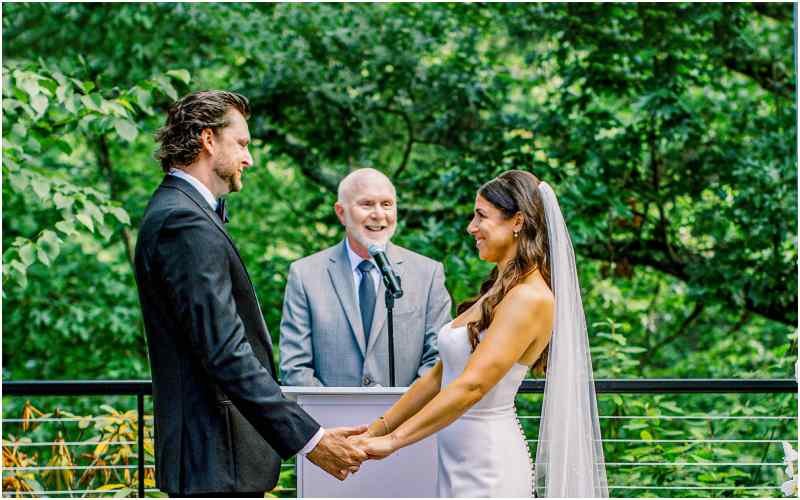
Wedding officiant conducting a marriage ceremony while the couple exchanges vows.

How to Officiate a Wedding: The Complete Step-by-Step Guide

Someone you love just asked you to officiate their wedding. The honor feels enormous — and so does the pressure. What if you miss a legal step and their marriage is invalid? What if you blank on stage in front of two hundred people?

That fear is real. A botched ceremony or unsigned license is not a minor embarrassment — it is a legal problem that follows the couple for years. Most guides online skim over the details that actually matter.

This guide solves that. From getting legally ordained to signing and filing the marriage license, every step is covered clearly, in the right order.

how to officiate a wedding

What Does It Mean to Officiate a Wedding?

An officiant is the person legally authorized to conduct a marriage ceremony and sign the marriage license. The role sits at the intersection of law and emotion — you must satisfy both.

Your two non-negotiable legal duties are: leading the Declaration of Intent (the “I do” exchange) and delivering the Pronouncement of Marriage. Without both, the ceremony has no legal standing, regardless of how moving it feels.

Beyond the legal minimum, your role shapes the entire tone of the day. You tell the couple’s story, guide their guests through the ritual, and set the pace for every element from processional to recessional.

Step 1: Confirm You Are Legally Eligible to Officiate

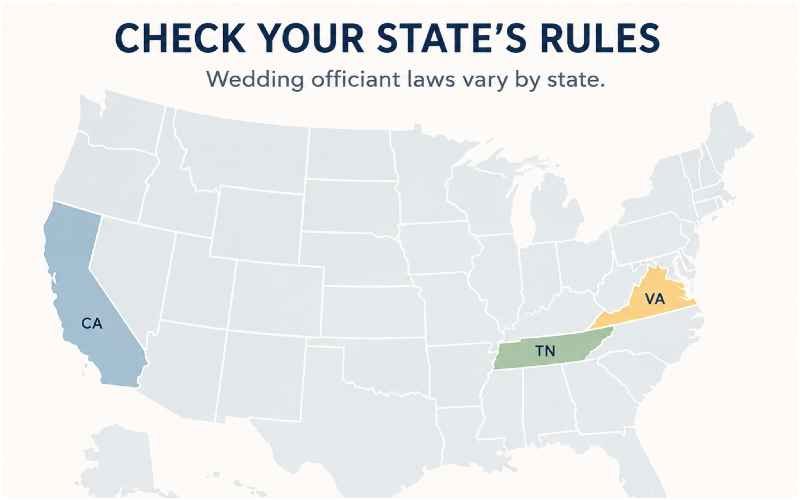
Before you agree to anything, verify your legal eligibility in the state or country where the wedding takes place. Laws vary significantly — not just by state, but sometimes by county.

Who Can Legally Officiate a Wedding in the United States?

  • Ordained ministers from any recognized religious organization
  • Civil officials: judges, magistrates, justices of the peace
  • Friends or family ordained online through organizations like the Universal Life Church
  • Court-appointed one-day officiants (available in select counties)

Most U.S. states accept online ordination and allow anyone to legally marry a couple after completing a free, instant process. States including Massachusetts and New York also offer a One-Day Marriage Designation that grants temporary authority to perform a single ceremony.

Contact the county clerk’s office in the county where the wedding takes place. Ask them directly: what credentials do they require from an officiant? Some counties want a printed ordination certificate; others need a letter of good standing from the ordaining organization.

Important: The Virginia and Pennsylvania Exception

Virginia and Pennsylvania apply stricter rules. Virginia requires officiants to register with the state before performing a ceremony. Pennsylvania mandates that each county receives a copy of your ordination documents in advance. Check state-specific requirements at least 60 days before the wedding date.

how to officiate a wedding

Step 2: Get Ordained Online (Free and Takes 5 Minutes)

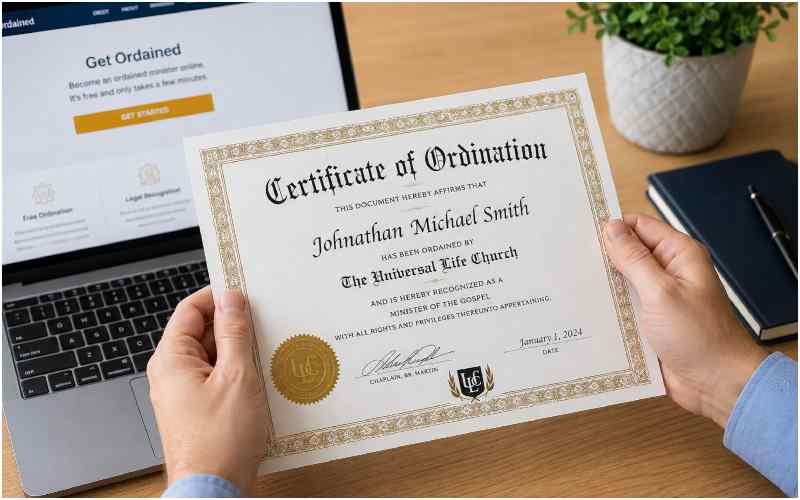
Getting ordained online is the fastest path to legal authority as a first-time officiant. Organizations like the Universal Life Church offer free, immediate ordination that most U.S. states recognize.

Visit an accredited online ordination body, such as Universal Life Church, complete the registration form, and receive your credentials by email. The process takes under five minutes.

After ordination, order a physical credential package if your county requires documentation. This typically includes a printed ordination certificate and a letter of good standing. Order these at least 30 days before the ceremony to avoid delays.

Keep a digital and physical copy of your credentials. Bring both to the ceremony. Wedding planners and county clerks appreciate officiants who arrive prepared with paperwork in hand.

how to officiate a wedding

Step 3: Understand the Marriage License Requirements

The marriage license is the couple’s responsibility to obtain — but you are responsible for signing it correctly and returning it on time. A missed deadline or an incomplete signature creates bureaucratic headaches that can delay the couple’s official marriage certificate for months.

Marriage License Validity and Waiting Periods by State

License validity and waiting periods differ significantly across states. Use this table as a reference — always verify with your local county clerk before the wedding date.

State License Validity Waiting Period Return Deadline
California 90 days None 10 days
New York 60 days None Within 60 days
Texas 90 days 72 hours N/A (couple files)
Nevada 1 year None N/A (couple files)
Washington 60 days 3 days State deadline
Colorado 35 days None State deadline
Indiana 60 days None State deadline

Source: State county clerk offices and state domestic relations law (e.g., NY Dom Rel L § 13, CA FindLaw Marriage License Requirements, 2024–2026).

Your Filing Responsibilities as Officiant

  • Sign the marriage license with your full legal name and official title exactly as they appear on your credentials
  • Confirm all required witnesses have signed (requirements vary by state)
  • Return the completed license to the county clerk or recorder within the deadline — typically 5 to 30 days after the ceremony
  • File immediately after the ceremony; do not wait until you return from travel

Missing the return deadline does not automatically void the marriage, but it delays the couple’s ability to obtain certified copies — which they need for name changes, banking, immigration, and insurance updates.

Step 4: Meet with the Couple and Plan the Ceremony

Schedule a meeting with the couple at least 4–6 weeks before the wedding. This conversation is your research session — gather everything you need to write a ceremony that sounds like them, not like a generic template.

Questions to Ask the Couple

  • How did you meet, and what moment made you certain about each other?
  • What tone do you want — formal, casual, humorous, spiritual, or a blend?
  • Will you write your own vows, or do you want me to lead traditional vows?
  • Are there any readings, unity rituals, or cultural traditions to include?
  • Who will be responsible for the rings during the ceremony?
  • Do you want me to step aside for the kiss photo?

Ask the couple to share their story in writing before your meeting. Specific details — the city they first met in, the inside joke that became a nickname, the moment one of them knew — transform a generic speech into something the room will remember.

Unique Insight: The Ideal Ceremony Length

Most wedding guests grow uncomfortable after 20 minutes of standing or sitting in formal attire. Professional officiants report that 12–18 minutes is the sweet spot for a ceremony that feels complete without losing the room. Build your script to that length, not longer, unless a specific cultural or religious tradition requires it.

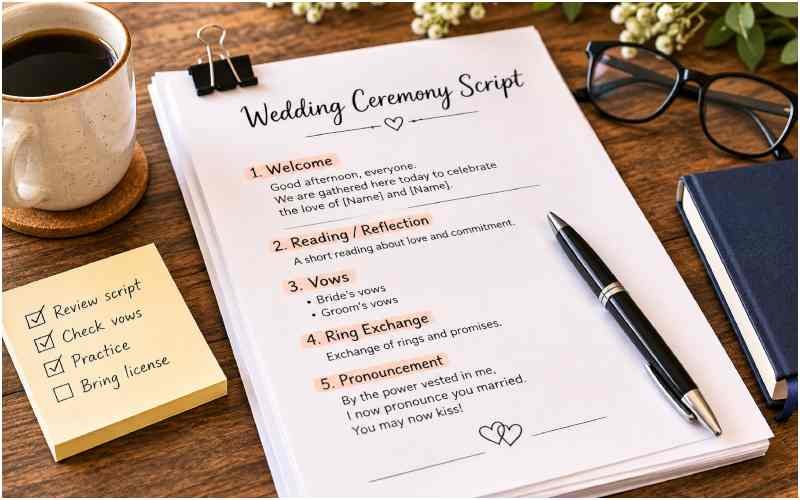
Step 5: Write a Wedding Ceremony Script That Actually Works

A well-structured script keeps you present and confident. It also protects the couple from the worst-case scenario: an officiant who freezes mid-ceremony.

The Legal Minimum: Two Elements You Cannot Skip

Every legally valid ceremony requires exactly two spoken elements. Everything else — readings, unity rituals, personalized stories — is optional.

  • Declaration of Intent: You ask each partner, “Do you take [Name] to be your [spouse]?” They answer “I do.”
  • Pronouncement of Marriage: You declare, “By the power vested in me, I now pronounce you married.”

Full Ceremony Elements: What to Include and Why

Use this table to plan which elements fit the couple’s vision and the ceremony’s time constraints.

Ceremony Element Required by Law? Typical Duration Can Be Skipped?
Welcome / Opening Words No 1–2 minutes Yes
Declaration of Intent (I Do) YES 30 seconds Never
Vows Exchange No (in most states) 2–4 minutes Depends on state
Ring Exchange No 1–2 minutes Yes
Pronouncement of Marriage YES 30 seconds Never
Unity Ritual (candle/sand etc.) No 2–5 minutes Yes
Closing Words No 1 minute Yes
The Kiss No 15 seconds Yes

How to Open a Wedding Ceremony: The Welcome

Skip “Dearly beloved” unless the couple specifically requests a traditional tone. Open with something that grounds the room in this specific relationship and this specific moment.

A strong opening names the couple, acknowledges the guests, and tells one specific truth about why this marriage matters. Keep it under 90 seconds.

Example opening: “We’re here today because [Name] and [Name] chose each other — and they’ve asked all of you here to witness that choice. That makes every person in this room part of this story.”

Writing the Middle: The Couple’s Story

The middle section carries the emotional weight of the ceremony. Draw from your interview notes. Use one specific story — not a list of qualities, not a general statement about love. One moment, told well, moves a room.

Weave naturally into the vows after the story. The transition from “this is who they are” to “and now they choose each other forever” flows best when the story sets it up.

Ceremony Script Tip: Read It Aloud Three Times

Read your full script aloud — not silently — at least three times before the wedding day. Time yourself. Mark every place where your voice wavers or the phrasing feels unnatural. Rewrite those sections. The script should sound like speech, not formal writing.

Unique Insight: The “Freeze” Problem No One Talks About

Even experienced speakers freeze in high-emotion environments. Wedding ceremonies trigger this because the stakes feel enormous and the silence feels infinite. Combat this by printing your script in a large, readable font (minimum 14pt), keeping it in a simple folder, and marking every pause point with a double slash //. A marked pause looks intentional. A forgotten line looks catastrophic.

Step 6: Attend the Rehearsal — and Run It Properly

The rehearsal is your single most important preparation tool. Attend it. Run it. Own it.

Walk through the full ceremony from processional entrance to recessional exit. Practice with the actual microphone if the venue uses one. Test the lighting at the same time of day as the ceremony — shadows on faces photograph poorly and make you look unprepared on a day when every detail is documented.

Confirm where the couple stands relative to the officiant, where guests face, and where the photographer will position for the ring exchange and pronouncement. These details feel minor during rehearsal and catastrophic if ignored on the day.

Rehearsal Checklist for Officiants

  • Confirm the full processional order with the wedding coordinator
  • Verify microphone volume and feedback issues
  • Identify the ring bearer and confirm handoff timing
  • Establish where you step during the kiss for photography clearance
  • Confirm who holds the marriage license before and after the ceremony
  • Review the rain plan location if the ceremony is outdoors

Step 7: What to Do on the Wedding Day

Arrive at the venue at least one hour before the ceremony begins. This is non-negotiable. Your early arrival signals to the couple — and every vendor — that you are composed and in control.

Pre-Ceremony Checklist

  • Bring two printed copies of your script — one for you, one as backup
  • Bring your ordination credentials and a government-issued ID
  • Confirm the marriage license is on-site and review it for completeness before the ceremony begins
  • Touch base with the DJ or band about the processional music cue
  • Locate the witnesses and confirm they understand their signing role
  • Check in with the wedding planner or coordinator for any last-minute changes

During the Ceremony: Delivery Principles

  • Speak slower than feels natural — the emotion of the room slows perception
  • Make eye contact with the couple, not your script, during the key moments
  • Pause after the Declaration of Intent to let applause or emotion settle
  • Step to one side before inviting the kiss so the photographer has a clear shot
  • Project your voice toward the guests, not the couple, during the pronouncement

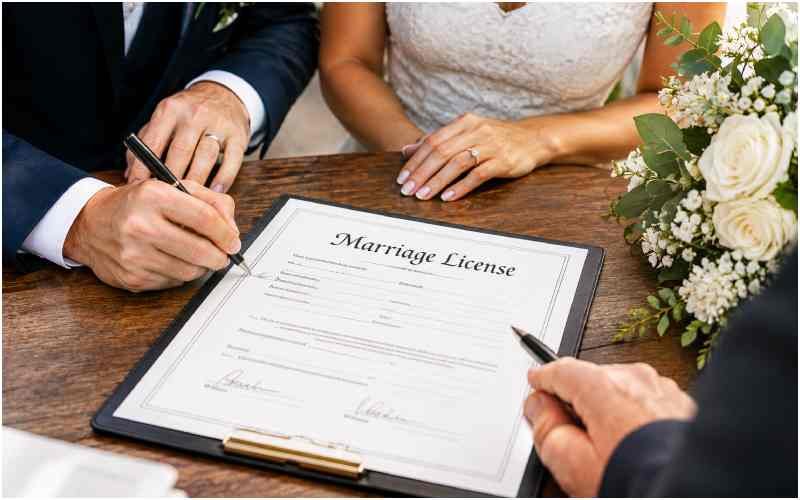
Step 8: Sign and File the Marriage License After the Ceremony

This step determines whether the marriage is legally real. Complete it before you leave the venue.

Sign the license with your full legal name and your title exactly as they appear on your ordination credentials. Take your time — sloppy handwriting or an incomplete signature creates problems with county records clerks.

Collect signatures from any required witnesses at the same time. Then set a reminder to file the license within one to two days of the ceremony, well inside your state’s return deadline.

For a deeper dive into the legal paperwork side of officiating — and the surprising ways delayed filing can affect a couple’s legal status — explore this thoughtful perspective on overlooked ceremony traditions and their modern significance.

Officiant Mistakes That Ruin Ceremonies (and How to Avoid Them)

Mistake 1: Improvising the Vows

Improvised vows feel brave and backfire badly. One experienced officiant described watching a colleague freeze mid-sentence during an ad-libbed passage — the silence lasted long enough to make every guest uncomfortable. Write your script. Every word. Then practice it until it feels natural.

Mistake 2: Wrong Tone for the Venue

A roast-style speech flops in a cathedral. A stiff, formal script feels strange at a barefoot beach ceremony. Match your tone to the venue, the guest list, and the couple’s stated vision — not your personal comfort zone.

Mistake 3: Missing the Filing Deadline

Forgetting to file the marriage license is the most consequential administrative mistake an officiant can make. Set a phone reminder before you leave the reception. File the license within 24 hours of the ceremony wherever possible.

Mistake 4: Choosing the Wrong Person as Officiant

Not every close friend is the right choice. The ideal officiant combines public speaking confidence, organizational reliability, and genuine knowledge of both partners. Couples should choose someone who can manage nerves, stick to a schedule, and handle legal paperwork correctly under the emotional pressure of the day.

The Hidden Ceremony Detail Most Officiants Miss: Ritual Symbolism

Most officiant guides focus entirely on logistics. They overlook the layer of ceremony that guests feel most deeply: symbolic ritual.

Flowers, unity rituals, and ceremonial objects carry meaning that extends far beyond decoration. When you explain the meaning of a ritual element to guests — even briefly — you transform spectators into participants. The room leans in.

Flowers, for example, have carried symbolic weight in wedding ceremonies across centuries. Understanding that symbolism helps you weave it naturally into your ceremony narrative. For an unexpected exploration of floral ceremony lore, this piece on the forgotten legend of the Boyle-cheloid flower and its mystery offers a fascinating lens on how botanical traditions become ceremony ritual.

When you take a moment during the ceremony to name the symbolic weight of an element — a handfasting cord, a unity candle, a specific flower — you give guests language to carry the memory forward. That is what separates a competent officiant from one the couple talks about for decades.

Leave a Comment

Your email address will not be published. Required fields are marked *

Scroll to Top