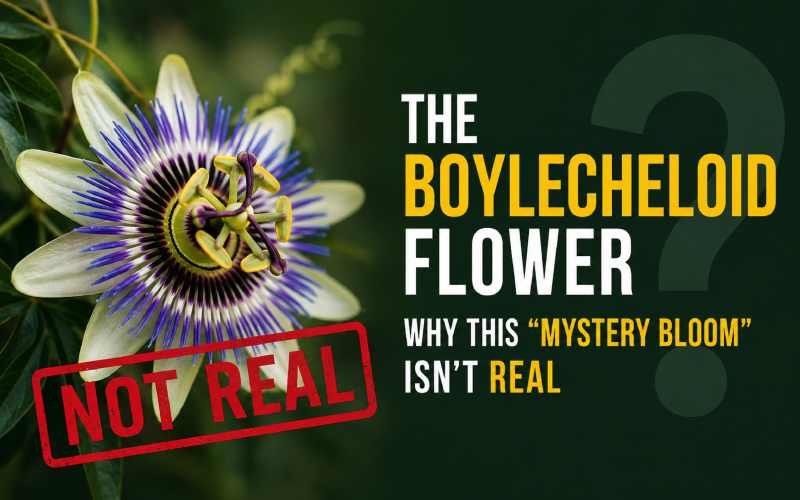
Search for the Boylecheloid flower and you will find dozens of articles describing a rare, color-shifting bloom that grows in hidden mountain valleys and smells like vanilla and sandalwood. None of it is real. No botanical database, herbarium, or scientific journal lists a plant by this name, and the articles describing it contradict each other on nearly every detail.
Is Boylecheloid a Real Flower?
No. There is no scientific classification, no herbarium record, and no peer-reviewed botanical source for a plant called Boylecheloid. This is not a case of an obscure or newly discovered species. It is a name that appears to have originated purely online, then spread across dozens of unrelated websites with increasingly elaborate, invented descriptions.
Why Do the Descriptions Contradict Each Other So Much?
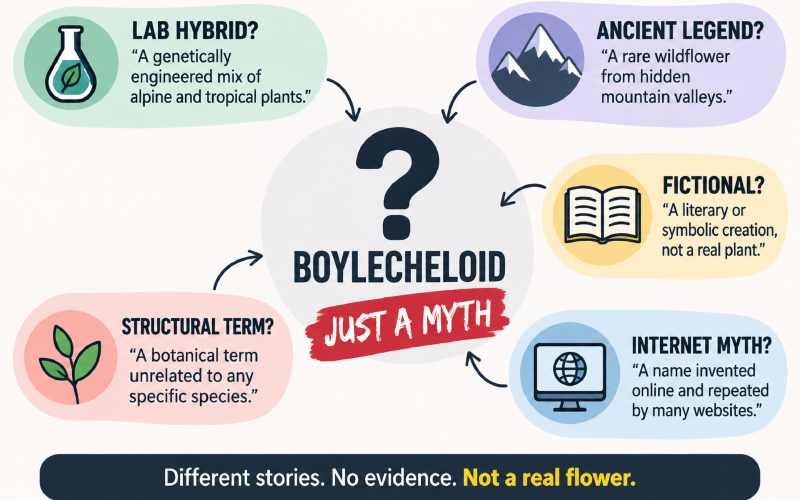
Different sites describe Boylecheloid as a lab-engineered hybrid of alpine and tropical plants, a naturally occurring wildflower from remote valleys, a purely symbolic or fictional literary invention, and a structural botanical term unrelated to any specific species, sometimes all within the same article. That level of contradiction is a strong sign the content was generated to fill search demand for an unusual-sounding name, not to describe something that was actually observed or studied.
One site claims the name is an anagram for Cosmos bipinnatus, a real, well-documented garden flower. That claim does not hold up. “Boylecheloid” has 12 letters, while “Cosmos bipinnatus” has 16, so the two cannot be rearrangements of the same letters. Even the sites attempting to “solve” the mystery are adding further misinformation on top of it.
How Do Names Like This Spread Online?
A name that sounds scientific, like Boylecheloid, with its “-oid” suffix suggesting biological resemblance, can pick up search interest simply because it sounds plausible. Once a few sites publish speculative content about it, search demand grows, which incentivizes more sites to publish their own version, often inventing new details rather than citing a shared source. The result is a topic that appears to have wide online coverage while having zero grounding in actual botany.
What Should You Look for to Spot This Pattern?
- No source cited for specific claims like color, scent, or habitat
- Descriptions that shift meaningfully from one article to the next
- A scientific-sounding name with no matching entry in real plant databases like Plants of the World Online or GBIF
- Content that describes the plant as simultaneously mythical, hybrid-engineered, and naturally wild
If You Want a Real Flower With a Similarly Fascinating Story
Real botany already has plants stranger than most invented ones. The corpse flower, formally Amorphophallus titanum, blooms rarely, grows over ten feet tall, and smells deliberately like rotting flesh to attract pollinators. The ghost orchid, native to Florida and Cuba, has no visible leaves and appears to float in midair when it blooms. Both are real, documented, and genuinely uncommon to see in person, without needing any invented mystery attached.
Quick Answers
Has anyone ever actually photographed a Boylecheloid flower? No verified photograph exists. Every image associated with the name traces back to stock photography or AI-generated imagery, not documented sightings.
Could Boylecheloid be a real plant with a different common name? There is no evidence connecting it to any documented species. Claims linking it to real flowers, like the false Cosmos bipinnatus anagram, do not hold up under basic verification.
Why would a website publish detailed care instructions for a plant that isn’t real? Search interest in unusual names can drive traffic regardless of accuracy, which creates an incentive to publish confident-sounding content even without any verifiable basis.
Written by: Asher Daniel, Lifestyle & Home Editor at Cupofjo.org
Last updated: August 24, 2026
Basis for this article: Researched by reviewing publicly available claims about this term and checking them against real botanical databases and basic verification.
What this article does not cover: This article does not provide growing or care instructions for Boylecheloid, since no verified plant by this name exists to provide accurate instructions for.
Corrections: If anything here is inaccurate or out of date, contact us and it will be corrected.
Asher Daniel covers home and garden topics within Cupofjo.org’s Lifestyle & Home section, including flagging inaccurate plant information circulating online.